What Makes Gili Trawangan Different: Comparing It to Other Indonesian Islands
Most holidays begin with a plan.
Book the hotel, tick off the attractions, find the best restaurants, then move on to the next destination.
Gili Trawangan has a habit of undoing that plan.
Only a few minutes after stepping off the fast boat, familiar holiday routines begin to fade. Bicycle bells replace traffic noise. Cidomo horses stroll along sandy lanes instead of taxis lining the roadside. Dive instructors chat with returning guests over coffee while newcomers wheel their luggage away from the harbour, still wondering how much there is to see on such a small island.
By tomorrow, many of those same travellers will stop asking that question.
Size has never been what makes Gili Trawangan memorable.
Anyone can find white-sand beaches, clear water, and spectacular sunsets across Indonesia. Beautiful coastlines are hardly rare in an archipelago of more than 17,000 islands.
What stays with people is something less obvious.
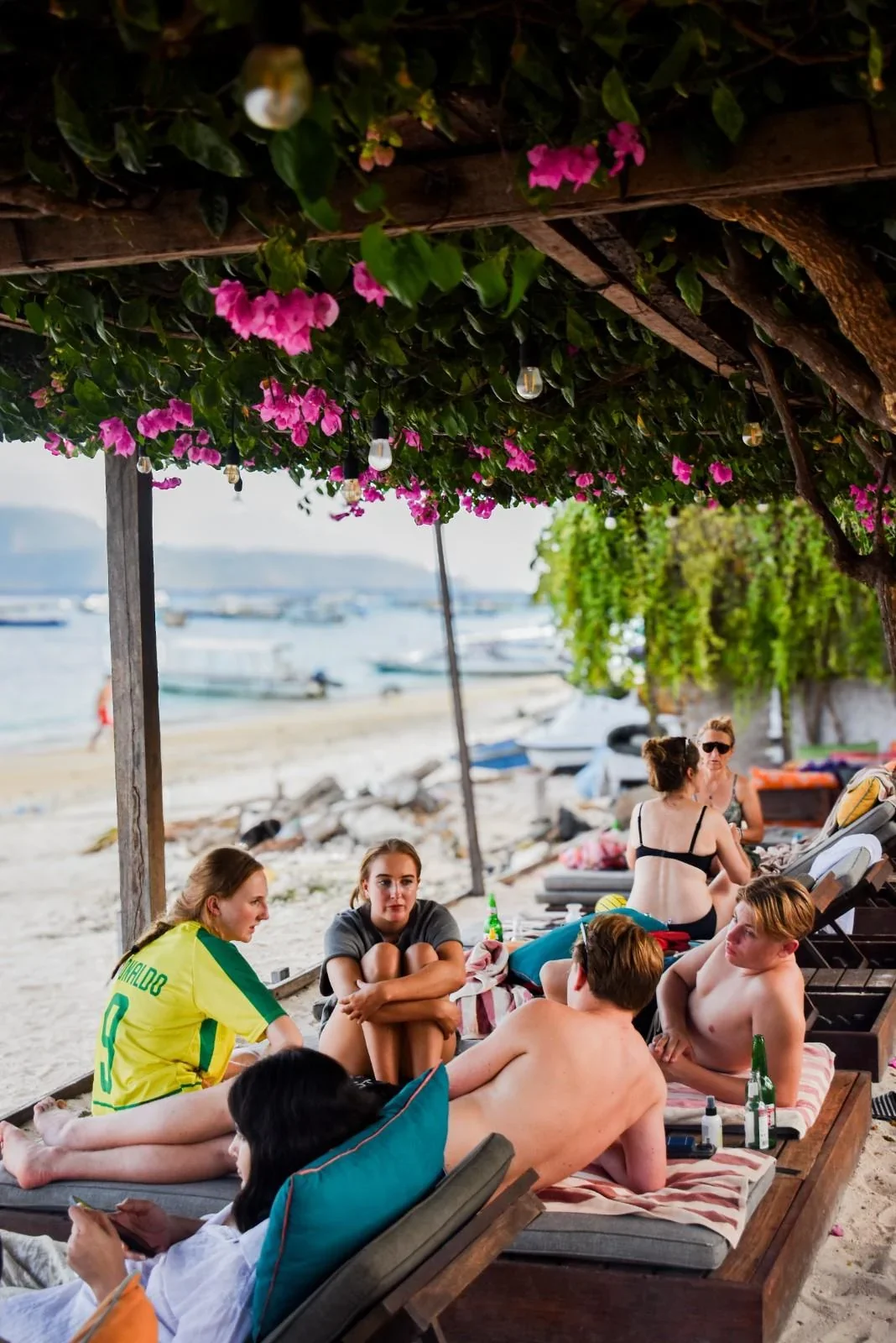
Breakfast stretches longer because nobody feels like leaving the beachfront café. A short snorkelling trip becomes an unexpected search for sea turtles. Sunset drinks quietly turn into dinner as conversations continue long after daylight disappears behind Bali.
Without realising it, the day slows down.
So do you.
Very few places manage that.
Bali encourages exploration. Every district feels different, inviting visitors to discover another temple, another café, another beach, or another cultural experience. Lombok rewards travellers willing to drive further in search of waterfalls, surf breaks, and mountain scenery. Nusa Penida captures attention with dramatic cliffs that seem almost too perfect to be real.
Gili Trawangan follows another rhythm.
Nobody arrives with the intention of doing less.
Almost everyone leaves wishing they had.
Not because the island lacks things to do, but because every experience feels close enough that rushing becomes unnecessary. Walking replaces planning. Cycling replaces driving. Recommendations from strangers often become the highlight of the afternoon simply because following them takes five minutes instead of fifty.
Perhaps that's why so many visitors extend their stay.
Another night suddenly feels like a better idea than another destination.
Rather than comparing which Indonesian island is "better", a more interesting question is why each one feels so different once you're actually there.
That's exactly what this guide explores.
What Defines the Gili Trawangan Experience?
Ask ten returning visitors about their favourite memory, and you'll probably hear ten different stories.
Learning to scuba dive for the first time.
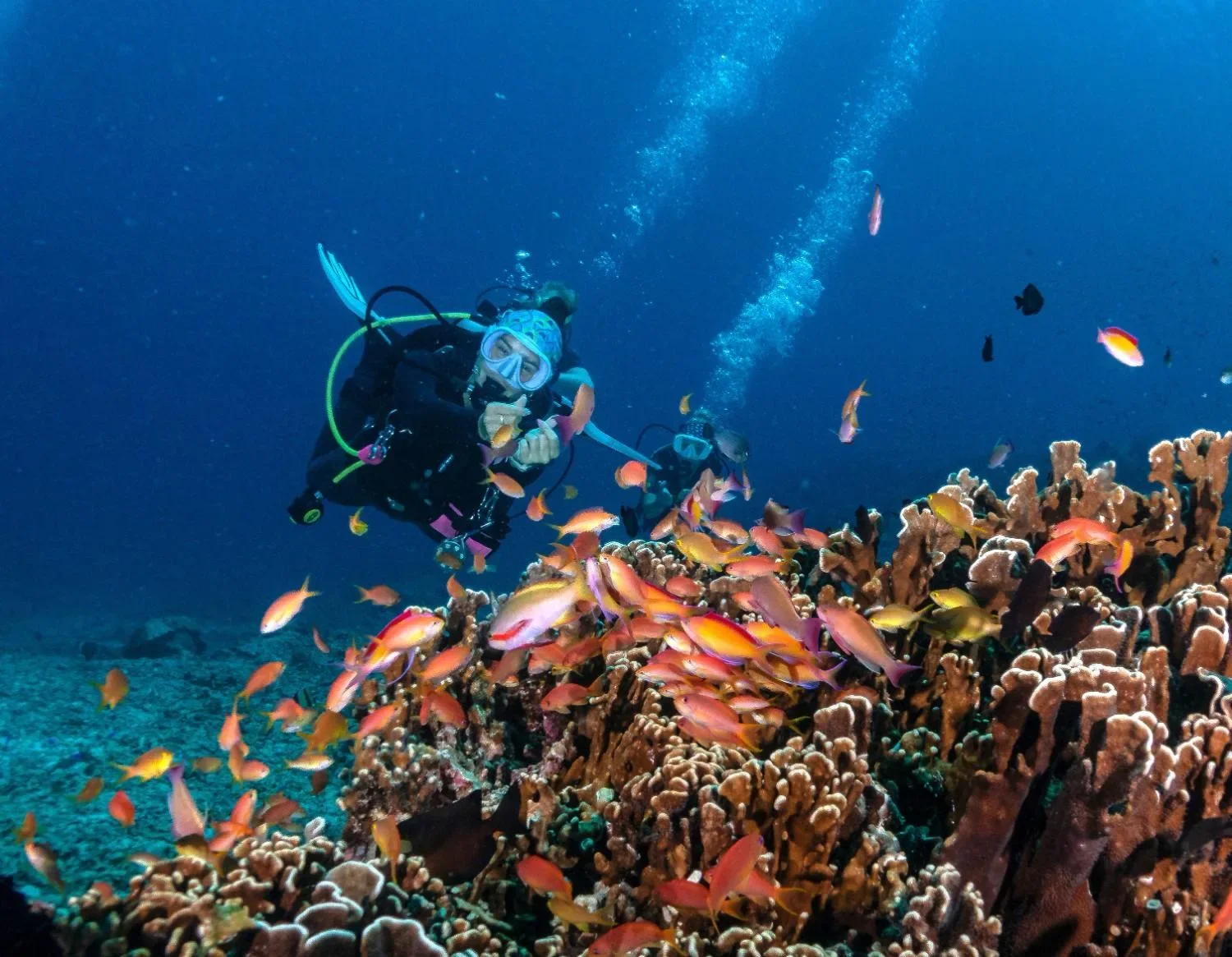
Watching a turtle glide across the reef during a morning snorkel.
Cycling around the island before breakfast while most beaches are still quiet.
Finding a café on the first day, then returning every morning for the rest of the trip.
Notice something?
Almost none of those memories revolve around a famous landmark.
Life on Gili Trawangan isn't built around one headline attraction.
Small moments gradually become daily routines, and those routines often become the memories people talk about long after returning home.
Traffic Stops Mattering
Arrival always feels busiest around the harbour.
Fast boats unload passengers from Bali and Lombok. Hotel teams greet arriving guests, porters help with luggage, and cidomo drivers wait patiently nearby.
Walk a few hundred metres, though, and everything changes.
Busy quickly becomes peaceful.
Morning conversations drift from cafés instead of traffic lights. Bicycle bells politely announce someone passing behind you. Dive boats head towards nearby sites while instructors wave to guests they certified only days earlier.
No ride-hailing apps.
No intersections.
No endless search for parking.
Movement becomes wonderfully uncomplicated.
Freedom comes from more than the absence of cars.
Extra time appears throughout the day without anyone noticing. Ten minutes saved here, fifteen there. Enough for another coffee, another swim, another stop at a bakery where warm pastries have only just come out of the oven.
Simple choices shape the entire experience.
Instead of wondering how to reach the next attraction, attention shifts towards whatever happens to be nearby.
Sometimes that's a quiet stretch of beach.
Sometimes it's a recommendation from someone you met over breakfast.
Sometimes it's deciding that nowhere else needs to be reached just yet.
Days Naturally Follow the Ocean
Morning starts on the eastern side of the island.
Sunlight reaches cafés overlooking the harbour while dive boats prepare to leave before conditions become busier. Snorkelling crews organise masks and fins, early swimmers slip into calm water, and fresh fruit appears on breakfast tables only a few steps from the shoreline.
By midday, life spreads across the coast.
Bicycles lean against palm trees.
Beach towels dry over handlebars.
Lunch arrives with sandy feet still covered in saltwater.
Later, attention quietly shifts west.
Nobody needs reminding.
Bean bags begin filling well before sunset, photographers search for the best angle, and conversations soften as Bali slowly turns into a silhouette across the horizon.
Tomorrow follows a similar pattern.
Surprisingly, it never feels repetitive.
Every day carries its own version of the same familiar rhythm.
How Gili Trawangan Compares to Other Indonesian Islands
Every island in Indonesia leaves a different kind of memory.
Some are remembered for dramatic landscapes. Others for ancient temples, mountain trails, or world-famous surf breaks. Ask someone about Bali, and they'll probably mention culture or beach clubs. Mention Lombok, and waterfalls or Mount Rinjani usually enter the conversation. Bring up Nusa Penida, and towering cliffs are often the first image that comes to mind.
Conversations about Gili Trawangan tend to sound different.
Instead of listing attractions, people talk about how quickly they settled into island life.
That's a subtle distinction, but an important one.
Memories here are often built around everyday experiences rather than major sightseeing moments. Those experiences become even more obvious when Gili Trawangan is compared with its neighbouring islands.
Gili Trawangan vs Bali
Bali thrives on variety.
One morning might begin with coffee in Canggu, followed by a temple visit in Ubud and dinner overlooking the cliffs in Uluwatu. Every region offers something different, giving travellers endless reasons to keep exploring.
Many people love that energy.
Every day feels full.
Gili Trawangan creates almost the opposite feeling.
Hours aren't measured by how many places you managed to visit.
They're measured by how long you stayed somewhere because leaving didn't seem necessary.
Breakfast doesn't come with an eye on the clock.
Another coffee arrives because the sea is calm, the conversation is good, and today's dive briefing hasn't started yet.
Cycling around the island rarely follows the shortest route. A quiet beach, a shaded café, or someone recommending fresh gelato near the harbour is often enough to change direction without a second thought.
Nothing feels urgent.
That's one of the biggest differences visitors notice after spending time in both destinations.
Exploration Feels Different
Exploring Bali usually means discovering somewhere new.
Exploring Gili Trawangan often means returning somewhere familiar.
Favourite cafés become part of the morning routine.
Beach bars start recognising familiar faces after only a couple of evenings.
Dive instructors remember yesterday's guests and ask how everyone's arms are feeling after their first scuba lesson.
Those small interactions gradually change the atmosphere.
By the third or fourth day, the island starts feeling less like somewhere you're visiting and more like somewhere you've temporarily slipped into.
That's difficult to create on larger destinations.
Gili Trawangan vs Nusa Penida
Both islands attract travellers looking for crystal-clear water and unforgettable coastal scenery.
Beyond that, similarities become surprisingly limited.
Nusa Penida is built around movement.
Visitors leave early, spend the day driving between famous viewpoints, climb countless staircases, and return with memory cards full of spectacular photographs.
Few people complain.
That's exactly why they came.
Life on Gili Trawangan unfolds at a gentler pace.
Photography still happens, especially during sunset, but cameras spend more time resting on café tables than hanging around someone's neck all day.
Moments become more important than viewpoints.
One afternoon might disappear between snorkelling with turtles and a late seafood lunch by the beach. Another might revolve around absolutely nothing except reading beneath a palm tree before walking across the island to watch sunset.
Nobody would call that an unproductive day.
Quite the opposite.
Holiday vs Lifestyle
Perhaps the biggest difference isn't what you see.
It's how you live while you're there.
Nusa Penida feels like somewhere you explore.
Gili Trawangan feels like somewhere you briefly belong.
Coffee comes from the same café because the barista already knows your order.
Dinner happens at the restaurant you stumbled across on your first evening because it simply feels right to return.
Morning walks become familiar enough that you recognise the same faces heading towards dive centres before the first boats leave.
Those routines aren't planned.
They quietly develop on their own.
Gili Trawangan vs Lombok
Stand on Gili Trawangan's eastern shoreline just after sunrise and Lombok dominates the horizon.
Mount Rinjani rises in the distance while fishing boats begin crossing the channel, reminding visitors how close the two islands actually are.
Geography may connect them.
Travel experiences couldn't be more different.
Lombok rewards curiosity.
Roads lead towards waterfalls, traditional Sasak villages, hidden beaches, and mountain landscapes that reveal something new around almost every corner.
Planning matters because distances matter.
Gili Trawangan removes that equation altogether.
Maps quickly become unnecessary.
Distances shrink to minutes instead of hours.
Choosing between walking and cycling becomes the biggest transport decision most visitors make all day.
Adventure Doesn't Always Mean Going Further
Adventure means different things depending on where you are.
Across Lombok, it often involves climbing higher, driving further, or searching for somewhere hidden.
Around Gili Trawangan, adventure can begin only a few metres from shore.
Learning to breathe underwater for the first time.
Spotting a turtle unexpectedly while snorkelling.
Saying yes to a sunset sailing trip after hearing about it over breakfast.
Deciding to postpone tomorrow's fast boat because leaving suddenly feels like the wrong decision.
No mountain required.
No long journey necessary.
Sometimes the best travel experiences aren't found by covering more ground.
Sometimes they're found by staying exactly where you are for just one more day.
So, Which Indonesian Island Is Right for You?
After spending time on Bali, Lombok, Nusa Penida, and Gili Trawangan, one thing becomes clear.
Choosing between them isn't about finding the "best" destination.
Each island offers a completely different way to experience Indonesia.
Some holidays are built around discovering as much as possible.
Others are remembered because, for a little while, life becomes wonderfully uncomplicated.
That's where Gili Trawangan quietly stands apart.
Nobody comes here to spend hours in traffic.
Nobody needs to plan routes across the island or worry about fitting five attractions into one afternoon.
Instead, mornings begin with whatever feels right. Maybe a slow breakfast overlooking the sea. Maybe a dive boat waiting at the harbour. Maybe a bicycle ride with no destination beyond seeing where the quieter beaches lead.
Afternoons often change without warning.
One recommendation from another traveller leads to a different café.
A calm sea turns a short swim into an hour of snorkelling.
Sunset arrives before anyone notices how quickly the day has passed.
Looking back, those are rarely the moments people photograph the most.
They're simply the moments they remember.
Perhaps that's Gili Trawangan's greatest strength.
Rather than asking you to do more, it quietly reminds you how enjoyable travel can be when you stop trying to do everything.
Experience That Rhythm with Pesona Resort Gili Trawangan
By now, you've probably noticed a pattern.
Life on Gili Trawangan isn't measured by distance.
It's measured by how effortlessly one part of the day flows into the next.
Choosing where to stay should feel just as effortless.
Located only a short walk from the harbour, Pesona Resort Gili Trawangan places you close to the experiences that naturally shape a stay on the island. Join an early morning dive without rushing across town. Wander through cafés and local shops whenever the mood strikes. Walk to the west coast for sunset, then enjoy an easy stroll back beneath the evening sky as bicycles quietly pass and the island begins to slow for the night.
Back at the resort, the pace stays exactly the same.
Take a refreshing swim, unwind with a spa treatment, or settle in for dinner at Pesona Indian Restaurant, a long-established favourite known by returning travellers as well as many residents across the Gili Islands.
Nothing feels forced.
Nothing feels rushed.
Just the kind of stay that fits naturally with everything you've already come to enjoy about Gili Trawangan.
Frequently Asked Questions
Is two days enough for Gili Trawangan?
Two days is enough to experience the island's highlights, but many travellers find themselves wishing they had booked longer. Staying for three to five days gives you time to enjoy diving or snorkelling, cycle around the island, discover different cafés and restaurants, and experience Gili Trawangan without feeling rushed.
Is Gili Trawangan suitable for first-time visitors to Indonesia?
Absolutely. Easy to explore, welcoming, and completely car-free, Gili Trawangan is an excellent introduction to Indonesia's island lifestyle. Many travellers combine it with Bali or Lombok for a well-rounded holiday.
Can you explore Gili Trawangan without riding a bicycle?
Yes. Most hotels, dive centres, restaurants, cafés, and beaches are comfortably within walking distance. Renting a bicycle is popular, but many visitors happily explore the island entirely on foot.
What makes Gili Trawangan different from Nusa Penida?
While Nusa Penida is famous for dramatic viewpoints and full-day sightseeing, Gili Trawangan focuses on slowing down. Visitors often spend less time travelling between attractions and more time enjoying the beach, the sea, and the relaxed atmosphere.
Is Gili Trawangan a good destination for scuba diving?
Yes. The island is internationally recognised for its dive sites, experienced instructors, and beginner-friendly PADI courses. Certified divers will also find a wide variety of reefs, turtles, and marine life just offshore.
When is the best time to visit Gili Trawangan?
The dry season from May to October generally offers sunny days, calm seas, and excellent visibility for diving and snorkelling. Even outside these months, warm tropical temperatures make Gili Trawangan an enjoyable destination throughout the year.
Why do so many travellers return to Gili Trawangan?
Many visitors come for the beaches and marine life but return for something harder to describe. The island's slower pace, friendly community, walkable layout, and relaxed atmosphere create the kind of holiday that people often wish had lasted a little longer.
